![ROMAN REPUBLIC, L. Plautius Plancus, Denarius, 47 BC [ARR-75] - Image 2](https://colonialcoins.com.au/wp-content/uploads/2025/07/ARR-75-1.jpg)
Description
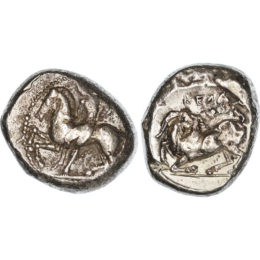
Roman Republic, the Imperatorial Period, Lūcius Plautius Plancus of gens Plautiā (formerly gens Munātia), as triumvir monētālis, Silver Denarius (3.88g, 18mm), ‘Victory in a Quadriga’ commemorative issue, Rome mint 47 BC. Obverse: Gorgoneion facing, with dishevelled hair, “L PLAVTIVS” below. Reverse: Victoria flies right amongst quadriga, “PLANCVS” below. Crawford 453/1c; Sydenham 959b. Nicely toned with a deep cabinet grey, some obverse marks below head and the reverse die a touch rusty, otherwise well centred and the reverse devices far more well struck then usually seen for the type, a nice example of this popular commemorative, Very Fine.
Although born as Gāius Munātius Plancus and a member of the minor plebeian family of gens Munātia, more specifically of the family branch of gens Munātī Plancī, he would later be adopted by a member of gens Plautiā, an older and more prominent plebeian family, and adopt the name Lūcius Plautius Plancus thereafter. Few details are known of Lūcius’ life other than his role as a triumvir monētālis of 47 BC as well as that he was at odds with the ‘Second’ Triumvirate – it is said that he was later condemned and forced to surrender to the Triumvirs in order to preserve the lives of his slaves who were being tortured for information of his location. Regardless, the greatest historical insight is actually revealed by his numismatic issue, the offered silver denarius, which, due to its defining elegance, has led many to believe it to be a re-interpretation of the famous artwork painted by the ancient Greek painter Nichomachus of Thebes in the 4th Century BC, aptly named by the Romans as ‘Victory in a Quadriga’. It is possible that this famous painting was either in the possession of, or witnessed first-hand by, Lūcius Plautius Plancus at the time of this commemorative denarius’ minting in 47 BC. This is corroborated by the fact that several years later the painting is known to have been moved to Rome by Lucius’ natural brother, Lūcius Munātius Plancus of gens Munātia, following his Gallic triumph in 43 BC, and thereafter its fate is unrecorded. With the painting lost to history, much like the rest of Nichomachus’ work, the design of this denarius, as either an inspired work or a recreation, is all the more poignant as an insight into the past.