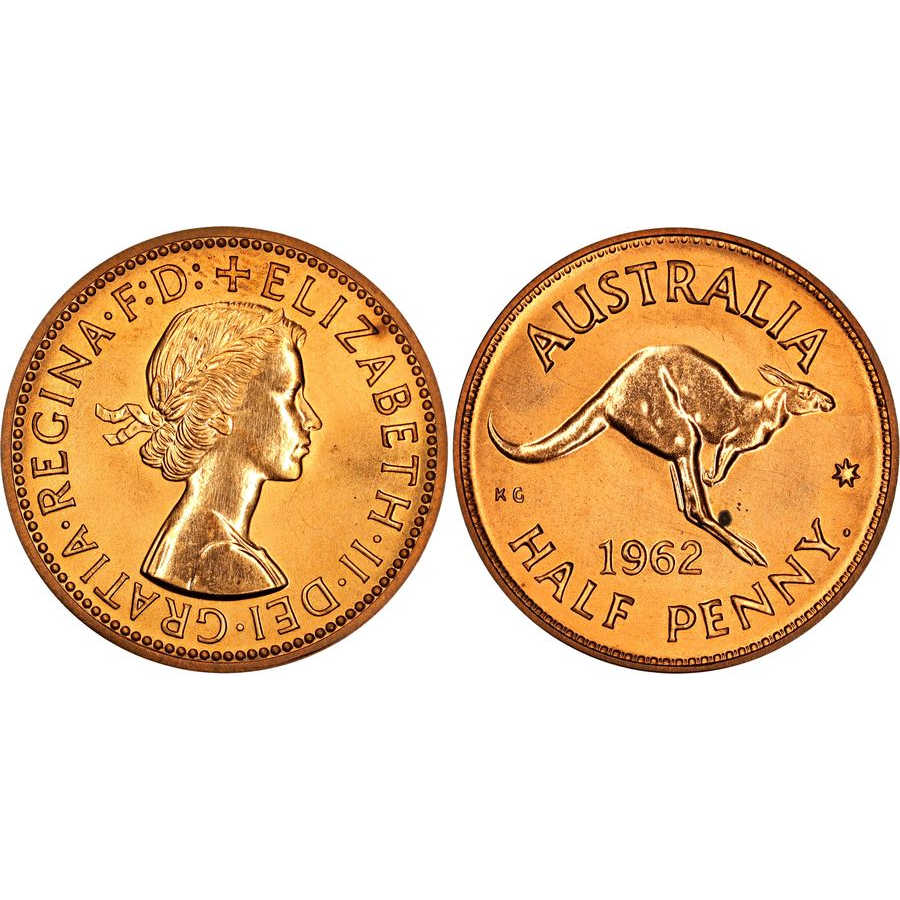
![George III, Æ ‘Cartwheel’ Penny, 1797. MS64Bn [ACP1c-9] - Image 2](https://colonialcoins.com.au/wp-content/uploads/2025/09/ACP1c-9-2.jpg)
Description
George III of the House of Hanover, King of Great Britain 1760-1820 AD, Æ ‘Cartwheel’ Penny, 1797, Soho mint, Handsworth. Obverse: Laureate, draped and cuirassed bust of King George III facing to the right, engraver’s initials “K” (Conrad Heinrich Küchler) raised on truncation, incuse legend surrounds on raised rim, “GEORGIUS III· D:G· REX.”. Reverse: Britannia seated left, hair collected in bun, draped and holding sprig of olive aloft in right hand and resting trident in left arm, Union Jack rests by her side above the mint name “SOHO” in relief, flowing waves below, ship in sail to lower left background, incuse date and legend surrounds on raised rim, “BRITANNIA.”. S-3777. Certified and graded by PCGS as Mint State 64 Brown. With a noteworthy degree of red hugging the devices, a sharp and nice example.
The obverse Latin legend reads “Geōrgius Tertius, Deī grātiā, rex”, with an English translation of “George the third, by the Grace of God, King”.
The English Penny is a small monetary piece and a denomination with one of the longest lifespans of use. First struck during the Anglo-Saxon period under King Offa of Mercia of the 8th century AD as a small silver coin, the penny would remain a small circulating silver coin for nearly ten centuries at which point, about the time of the Hanoverian dynasty, it would rarely see circulation and be used for Maundy set. In 1797, the Penny transitioned into a bronze coin and would remain in use until English decimalization in 1970. The penny and two pence of 1797, their first iteration in bronze, were large coins with a thick rim and incuse inscription, leading to the nickname ‘cartwheel’, and were designed by the Soho mint’s employee Conrad Heinrich Küchler. Although English coins, both denominations were used within the Australian colony as part of the Australian Proclamation of 1800 made by Philip Gidley King, the Governor of New South Wales, essentially Australia’s first monetary system. In an attempt to maintain circulating currency within the colony, each proclamation coin was given a high face value within Australia, the cartwheels were doubled – the Penny was revalued to two pence, the two pence to four pence.