![Anne, 'Roses & Plumes' Crown, 1713 [ECM-245] - Image 2](https://colonialcoins.com.au/wp-content/uploads/2026/01/ecm-245-1.jpg)
Description
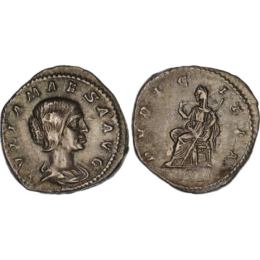
Kingdom of Great Britain, Anne of the House of Stuart, Queen of Great Britain 1702-1714 AD, Silver ‘Roses and Plumes’ Crown (30.00g, 39mm), 1713, Post-Union with Scotland, Royal mint London. Obverse: Third bust of Queen Anne facing to the left, diademed and wearing simple dress fastened at the front with round jewelled clasp, legend surrounds, “ANNA· DEI GRATIA·”. Reverse: Heraldic Charges of the Armorial of the House of Stuart displayed cruciform, each escutcheon surmounted by Saint Edward’s Crown, eight strings to the Irish Charge, Garter star central, alternating plume and Tudor rose in each angle, date either side of top crown, legend surrounds, “·MAG: BRI· FR· ET· HIB· REG·”. Edge: Inscription in raised lettering, “DECVS ET TVTAMEN ANNO REGNI DVODECIMO”. S-3603; KM-536. A masterful example crown of the final year of Anne’s reign, despite an obverse scratch to 7h the piece offers an idyllic cabinet tone of deep grey with magenta and blues as underlying brilliance on rotation, a very attractive piece, good Extremely Fine.
The Latin spanning across both obverse and reverse is the royal titulature of Queen Anne and is stated unabridged as “Anna, deī grātiā, Magnae Britanniae, Franciae et Hiberniae rēgīna”, with an English translation of “Anna, by the Grace of God, Queen of Great Britain, France and Ireland”. The edge Latin legend is stated in full and reads “Decus et tūtāmen, annō regni duodecimō”, with an English translation of “an ornament and safeguard, twelfth regnal year”.
The calendar year 1713 AD is reported to have had a meagre £7,232 of silver output across the silver denominations coined by the Royal Mint in London, an amount that pales before the over half a million £ coined in gold in the same year. This was a result of the increasing output of gold from Brazil, the ‘Brazilian Gold Rush’, which flowed into England via trade with Portugal, as well as the ‘Flight of Silver’ in which full-weight silver pieces were regularly exported to Continental Europe or to the East by the British East India Company due to silver’s higher buying power outside of England. It is said that some two-thirds of Brazilian gold is thought to have made its way to England, re-minted into Guineas.
The roses and plumes on the reverse of this 1713 Crown indicated that the silver content was sourced from the mines in England and Wales operated by the London Lead Company which occurred on some years of coinage from 1706 in the reign of Queen Anne until 1737 in the reign of George II.